
AI and the Future of Digital Marketing
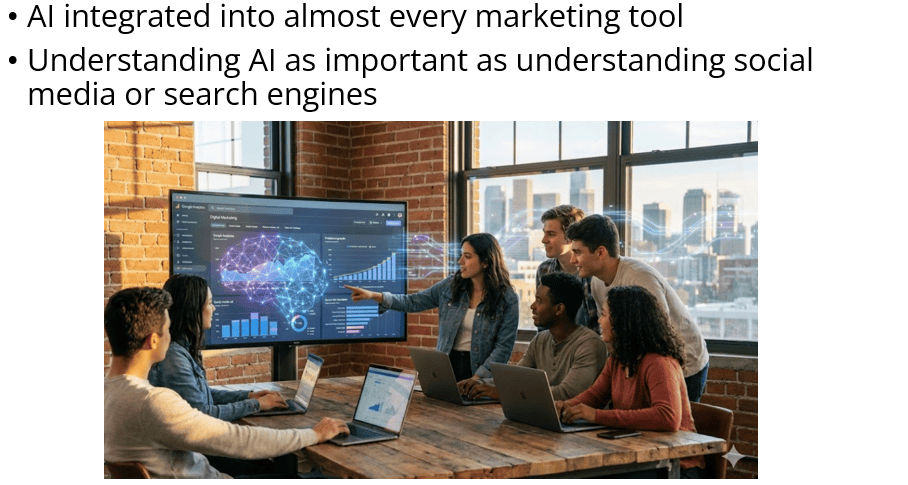
Today, we’re exploring how artificial intelligence, or AI, is shaping the world of digital marketing. AI is everywhere now, but many students still think it’s something complicated or meant only for big tech companies. In reality, AI has quietly become part of almost every tool marketers use, from analytics dashboards to ad platforms. Understanding how it works is becoming just as important as understanding social media or search engines. So let’s take a closer look at what AI actually does in marketing and how it’s likely to evolve in the coming years.
What Exactly Is AI?
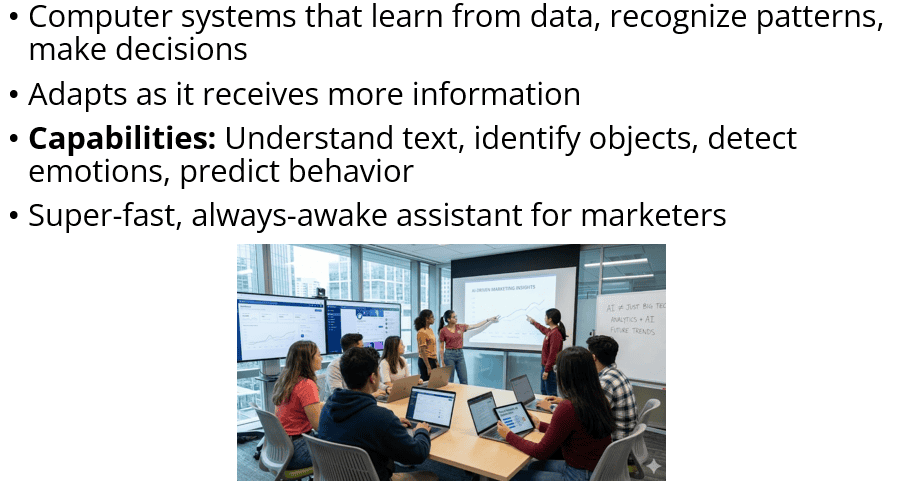
AI refers to computer systems that can learn from data, recognize patterns, and make decisions. Instead of following a strict set of rules like older software, AI adapts as it receives more information. It can understand text, identify objects in photos, pick up emotional tones in customer messages, and even predict what people might want next. You can think of AI as a super-fast, always-awake assistant that helps marketers solve problems and deliver better experiences.
How AI Helps Marketers Understand Data
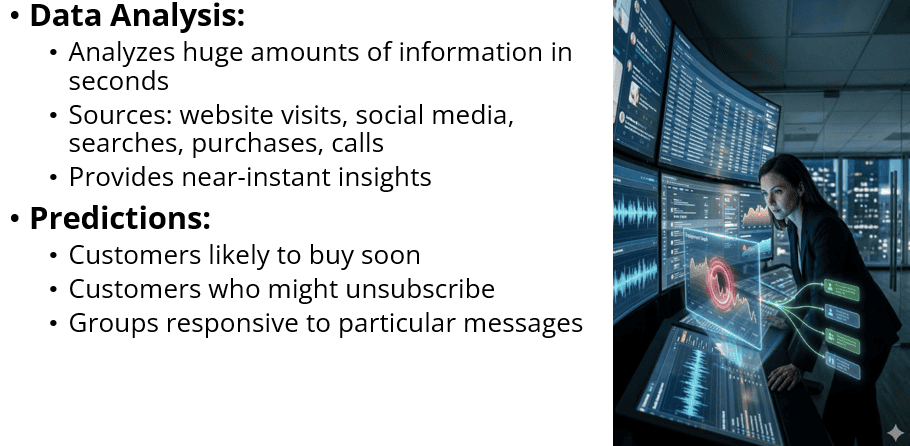
One of the biggest advantages of AI is its ability to analyze huge amounts of information in seconds. Marketers collect data from website visits, social media activity, searches, purchases, and even recorded calls. Looking at all that by hand would be impossible, but AI can scan everything at once and highlight what matters. It can notice sudden drops in engagement, point out which types of content people prefer this week, and explain why a certain campaign is performing differently than expected. Instead of guessing or waiting for monthly reports, marketers can understand what’s happening almost instantly.
AI also makes predictions. By studying past behavior, it can estimate which customers are likely to buy something soon, which ones might unsubscribe, and which groups may respond well to a particular message. These predictions help companies focus their efforts where they will matter most. In a world full of distractions and endless content, having this kind of guidance gives marketers a major advantage.
Personalizing the Customer Experience
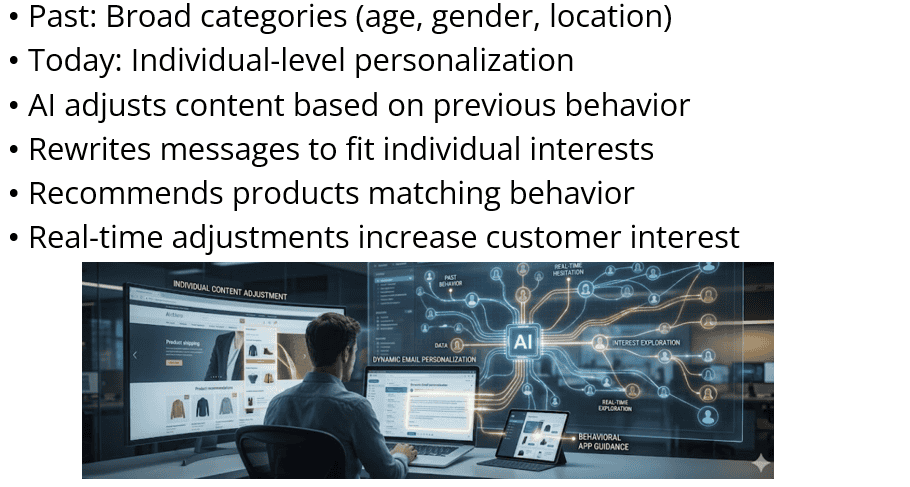
AI also plays a huge role in personalization. In the past, marketers divided audiences into broad categories like age, gender, or location. Today, AI personalizes experiences at the individual level. When someone visits a website, AI can adjust the content based on what that person looked at before. When a customer opens an email, AI can rewrite parts of the message so it fits their interests. When a person browses an app, AI can highlight certain features or recommend products that match their behavior.
This kind of personalization used to be impossible because it required constant human attention. Now, AI does it automatically, and it adjusts itself in real time. If someone hesitates during checkout, AI might gently suggest similar items or show a limited-time deal. If someone keeps exploring a certain topic, AI can guide them to videos, guides, or tools that help them learn more. When marketing feels personal and relevant, customers are more likely to stay interested.
AI’s Impact on Digital Advertising
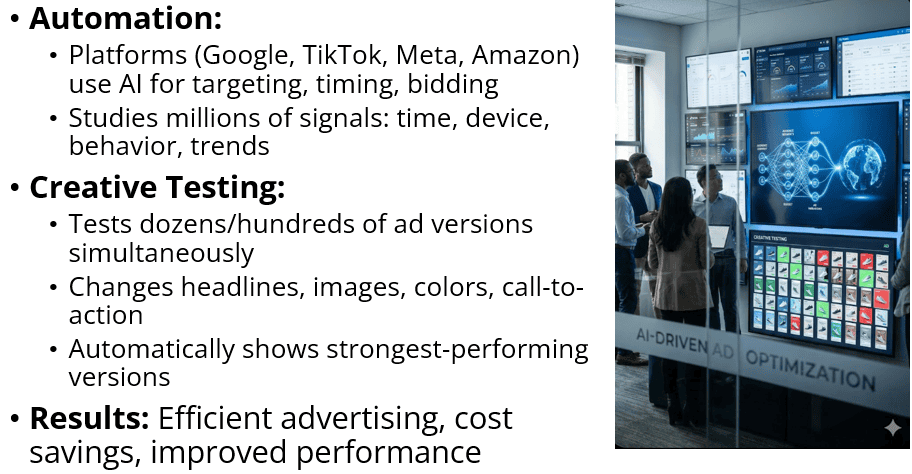
Digital advertising is one of the areas where AI has changed things the most. For years, marketers had to manually decide which audience to target, what budget to use, and which version of an ad to show. Now, AI handles most of those decisions. Platforms like Google, TikTok, Meta, and Amazon use AI to decide who should see an ad, when they should see it, and how much the system should bid to show it. AI studies millions of signals such as time of day, device type, past behavior, and even recent trends to determine the best way to deliver an ad.
AI also helps with creative testing. Instead of comparing only two versions of an ad, AI can test dozens or even hundreds at once. It can change the headline, image, color scheme, or call-to-action, then observe what people respond to. Once it identifies the strongest version, it automatically shows that version more often. This makes advertising more efficient, saves money, and usually improves results.
AI That Understands Images, Videos, and Voice
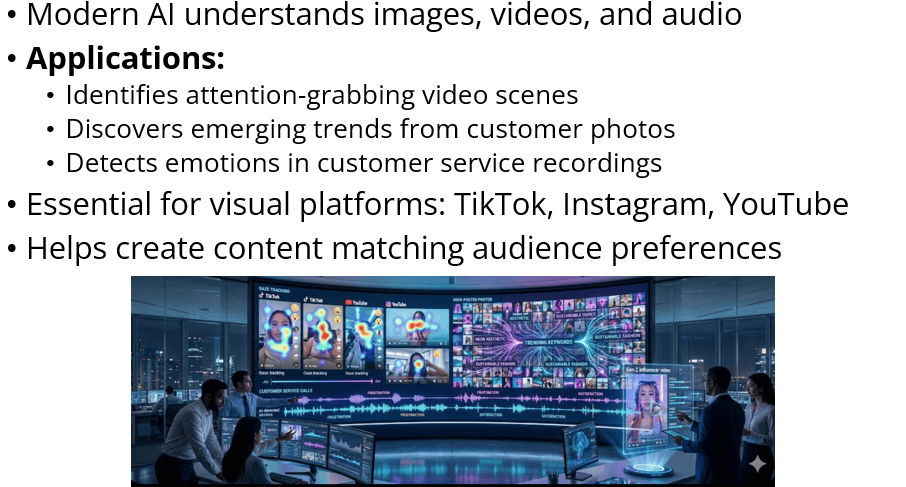
A major trend in AI today is something called “multimodal AI.” Earlier AI systems mostly understood text, but modern AI can understand images, videos, and audio as well. This is extremely helpful for marketers because so much online content is visual.
AI can watch a video and identify which scenes or styles attract the most attention. It can look at thousands of photos posted by customers and discover emerging trends. It can listen to customer service recordings and detect frustration or satisfaction. By understanding more types of media, AI gives marketers deeper insights into how people feel and what they respond to.
This shift is especially important because younger audiences interact heavily with visual platforms like TikTok, Instagram, and YouTube. AI helps marketers create content that matches the style, pace, and emotional tone that people enjoy.
AI and Content Creation
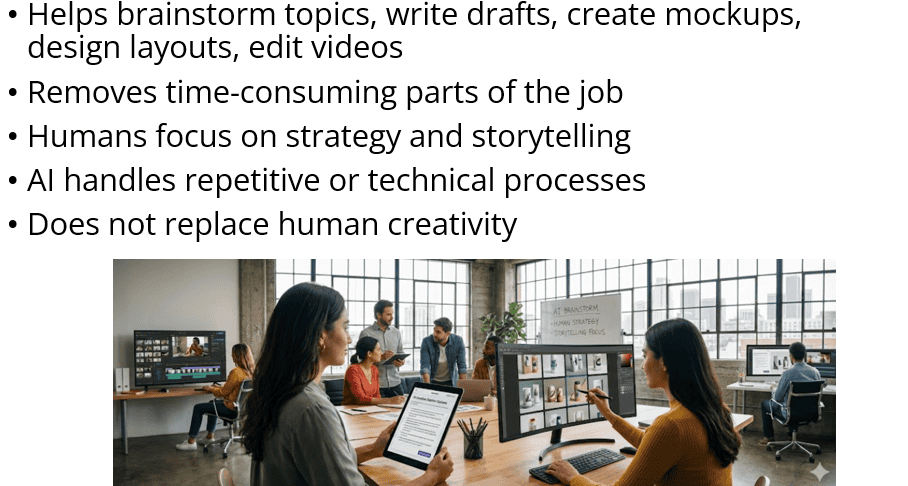
Another area where AI is becoming essential is content production. Marketers constantly need new ideas, captions, images, videos, and designs, and AI makes this process much faster. It can help brainstorm topics, write first drafts of blog posts, create product mockups, design layouts, and even edit video clips.
This doesn’t mean AI replaces human creativity. Instead, it removes the most time-consuming parts of the job. A marketer might ask AI to generate ten different caption options or produce a quick product image, then choose the best one and make adjustments. The result is a workflow where humans focus on strategy and storytelling while AI handles the repetitive or technical parts of the process.
Important Challenges to Consider
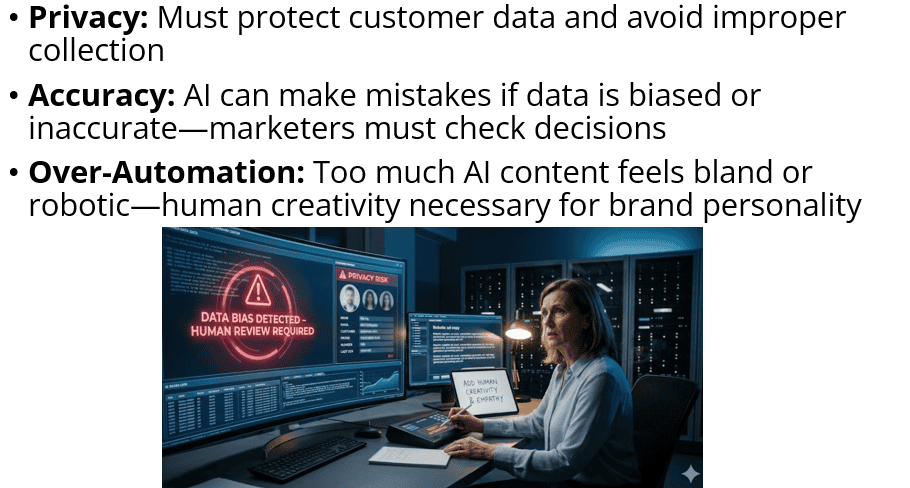
Even though AI offers many benefits, it also creates some challenges. Because AI relies on data, companies must protect customer privacy and avoid collecting information without proper permission. AI can also make mistakes if the data it learned from is biased or inaccurate. That means marketers must check AI’s decisions and make sure they align with fairness and good judgment. Another risk is relying too much on automation. If a brand lets AI generate everything, its content may start to feel bland or robotic. Human creativity is still necessary to give a brand personality and meaning.
Where AI Marketing Is Heading
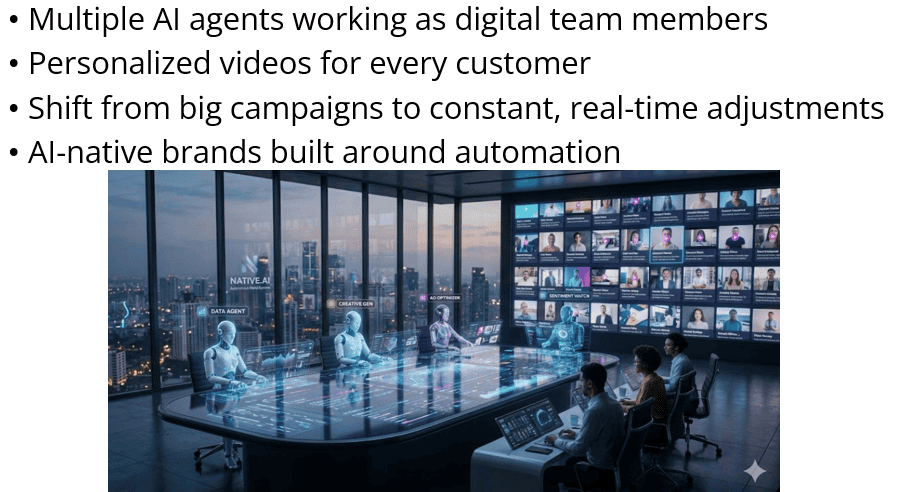
AI is improving quickly, and its role in marketing will become even bigger. In the future, it’s likely that companies will use multiple AI agents that work like small digital team members. One agent might analyze data, another might create images, another might optimize ads, and another might monitor customer reactions. AI will also make personalized videos common, allowing every customer to receive a unique message. Marketing strategies will shift away from a few big campaigns toward constant, real-time adjustments. Even entirely AI-native brands may appear—companies built around automation from the start.
Conclusion
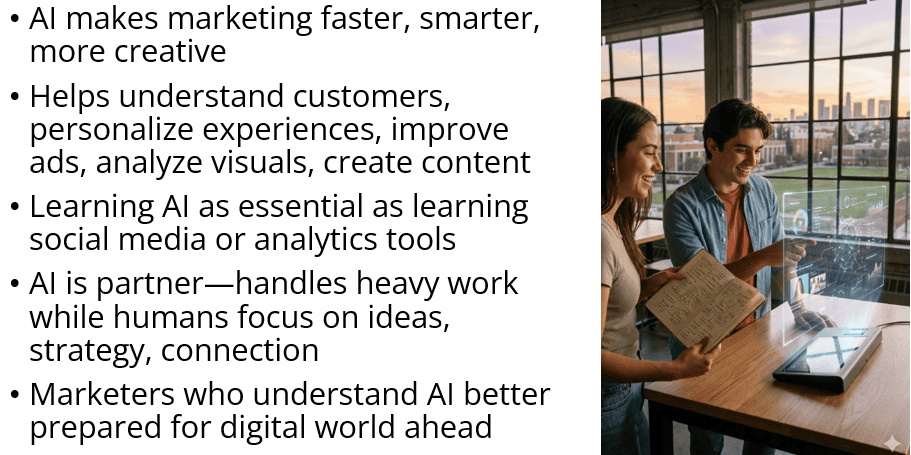
AI is reshaping digital marketing in ways that make the field faster, smarter, and more creative. It helps marketers understand customers, personalize experiences, improve ads, analyze visuals, and create content more efficiently. For students beginning their journey in marketing, learning how AI works is becoming just as essential as learning social media platforms or analytics tools. AI isn’t replacing marketers; it’s becoming a partner that handles the heavy work so humans can focus on ideas, strategy, and connection. As AI continues to evolve, marketers who understand how to use it will be better prepared for the digital world ahead.

** This article was written with assistance from ChatGPT